
Animate My Pet Blog
The Rise of AI Talking Pets: Why Dog and Cat Videos Are Taking Over Social Media
Sep 1, 2026
“Discover why AI talking pets are dominating TikTok, Reels, and Shorts. Explore the psychology of viral pet videos and learn how to make your pet talk in seconds.”
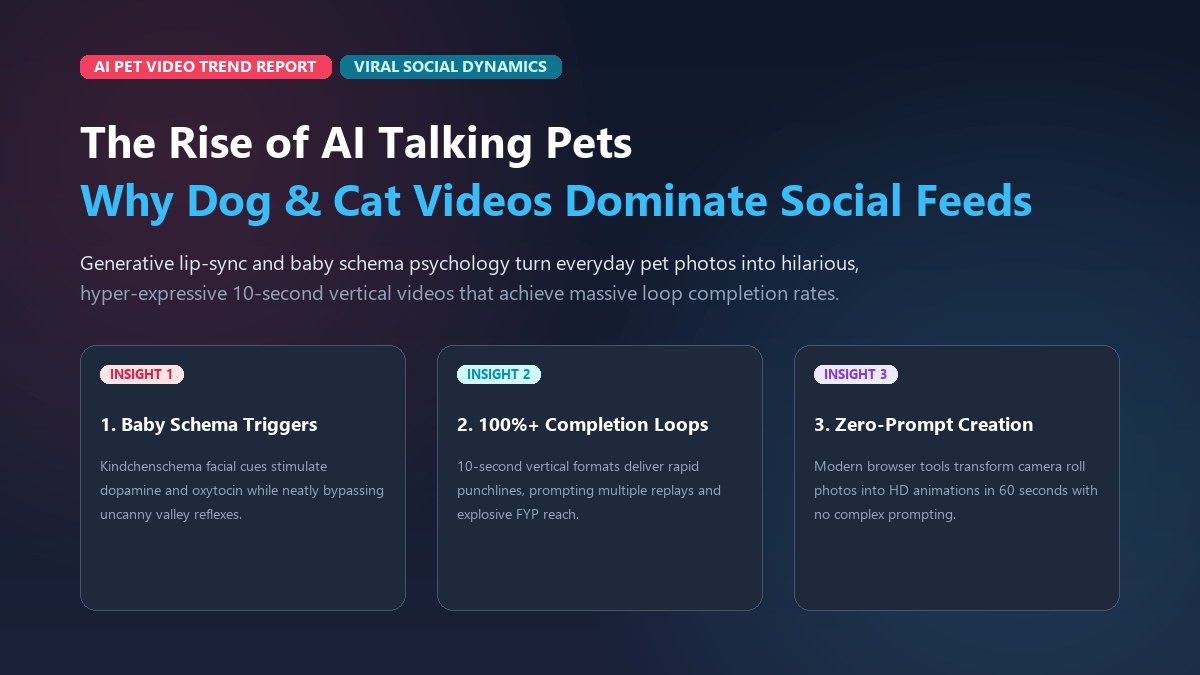
AI talking pets are taking over social media because generative lip-sync technology now allows creators to animate static dog and cat photos into hilarious, hyper-expressive 10-second vertical videos with a single tap. By combining evolutionary human affection for animal facial cues with short-form algorithm dynamics, talking pet videos achieve near-perfect retention rates and frictionless viral sharing across TikTok, Instagram Reels, and YouTube Shorts.
If you have spent even five minutes scrolling through your social feeds recently, you have likely encountered a dramatic golden retriever delivering an existential crisis about his bath time, or a tuxedo cat with a refined British accent giving an unapologetic review of cheap canned salmon. What once required Hollywood-grade VFX studios and days of tedious manual keyframing now happens in seconds on modern web platforms like Animate My Pet.
Elena, a graphic designer from Austin, discovered this phenomenon firsthand with her 14-year-old Persian cat, Winston. Winston was notorious for staring coldly at guests while sitting on the living room rug. One evening, Elena uploaded a single photo of Winston to Animate My Pet's creation studio, picked the "Royal" voice preset, and paired it with a 10-second script where Winston lamented the lack of imported velvet on his scratching post. Within 48 hours of posting the 9:16 clip to TikTok, Winston’s aristocratic complaint garnered 1.8 million views, 340,000 likes, and thousands of comments demanding a weekly series.
Elena’s experience is not an anomaly. It reflects a massive cultural and technological shift in how we create, consume, and share pet content online.
Key Takeaways
- Evolutionary Neurochemistry: AI talking pets trigger Kindchenschema (baby schema), stimulating dopamine and oxytocin surges while neatly bypassing the human "uncanny valley" reflex.
- Algorithmic Dominance: 10-second vertical video formats (9:16) achieve repeat-loop completion rates exceeding 100%, signaling high audience satisfaction to platform recommendation algorithms.
- The Zero-Prompt Shift: Modern creators no longer wrestle with complex diffusion seeds or multi-app software stacks; one-tap template engines turn static photos into HD animations in under 60 seconds.
- Creator Opportunity: Aspiring pet influencers and animal shelters are leveraging zero-prompt talking pet tools to build dedicated followings and monetize short-form content.
The Psychology of Viral Pets: Why Our Brains Cannot Scroll Past
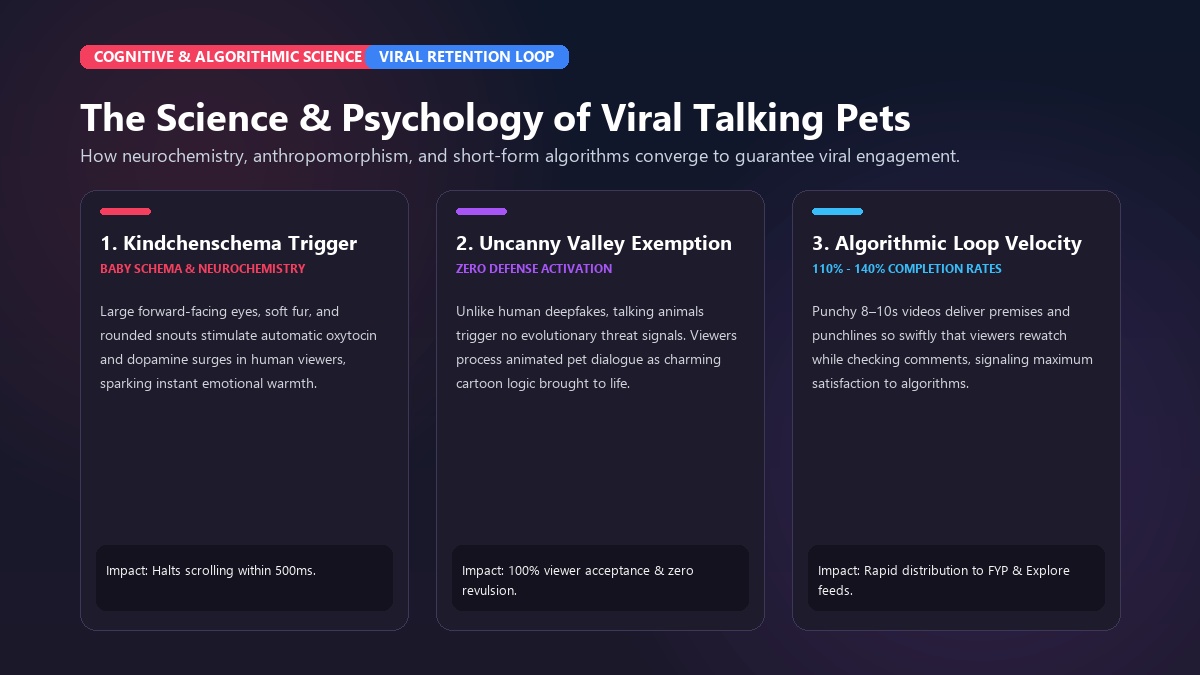
Why do talking animal clips stop us in our tracks while other synthetic media triggers skepticism? The answer lies at the intersection of cognitive ethology, evolutionary biology, and neuroscience.
[ Static Pet Photo ]
        │
        ▼ (Generative Lip-Sync & Facial Mapping)
[ Hyper-Expressive 9:16 Video ]
        │
        ├─► Kindchenschema Trigger (Oxytocin / Dopamine Surge)
        ├─► Anthropomorphic Connection (Decodes Animal Interiority)
        └─► Uncanny Valley Exemption (Zero Threat Detection)
1. Kindchenschema and the Neurochemistry of Cute
In the 1940s, Austrian ethologist Konrad Lorenz identified the concept of Kindchenschema (baby schema)—a specific set of physical features including large, forward-facing eyes, a rounded skull, soft fur, and small noses. Lorenz demonstrated that these juvenile traits automatically trigger an instinctive caregiving response in humans.
When we view dogs and cats, our brains release a dual surge of oxytocin (the bonding hormone) and dopamine (the primary neurotransmitter of reward and pleasure). When generative AI animates these beloved features—making the eyes blink warmly, the eyebrows tilt inquisitively, and the mouth articulate dialogue—that biological reward loop intensifies dramatically. The brain interprets the interaction as novel, delightful, and immediately comforting.
2. The Anthropomorphism Impulse
Humans are hardwired pattern-recognition creatures with an insatiable urge toward anthropomorphism: the attribution of human personality, intentionality, and moral reasoning to non-human beings.
Every pet parent has looked into their dog's eyes after a spilled trash can and thought, "I know you understand what you did." We constantly invent inner monologues for our pets. AI talking pets materialize this universal fantasy. It closes the cognitive gap between what we imagine our pets are thinking and what we see on our screens. Hearing a husky vocally justify why he ate a couch cushion feels like the ultimate comedic validation of what pet owners already suspect.
3. The "Uncanny Valley" Exemption
When AI tools generate synthetic human faces or deepfake human dialogue, viewers frequently experience the uncanny valley—an instinctive sense of unease or revulsion triggered when a human replica looks almost real, but misses subtle micro-expressions.
Animals, however, possess a cognitive exemption from the uncanny valley. Because human brains do not carry an evolutionary blueprint for what a canine or feline mouth "should" look like when articulating English vowels, our cognitive defenses never fire. Instead of appearing creepy or unnatural, an animated talking dog or cat reads as pure whimsical cartoon logic brought to life. Viewers accept the surreal animation instantly, allowing humor and charm to take center stage.
The Algorithmic Engine: Why TikTok, Reels, and Shorts Love Pet AI
The virality of talking animal videos is not merely accidental—it is perfectly optimized for the algorithmic reward systems governing modern short-form video platforms.
┌─────────────────────────────────────────────────────────────┐
│                 VIRAL RETENTION LOOP                        │
│                                                             │
│  [ 0 - 3s: Sensory Hook ] ──► Sync Mouth + Vocal Persona    │
│            │                                                │
│  [ 3 - 8s: Punchline Delivery ] ──► Sassy / Dramatic Arc    │
│            │                                                │
│  [ 8 - 10s: Replay Trigger ] ──► Seamless Loop (120% View) │
│            │                                                │
│  [ Algorithmic Signal ] ──► FYP / Shorts Recommendation      │
└─────────────────────────────────────────────────────────────┘
Pattern Interruption in the First Three Seconds
The average social media user scrolls past dozens of videos per minute. Platform algorithms on TikTok, Instagram, and YouTube prioritize early retention (the percentage of viewers who stay past the 3-second mark).
A high-contrast, front-facing pet photo that suddenly blinks and speaks with a crystal-clear human voice provides the ultimate pattern interruption. The visual and auditory juxtaposition jolts the brain out of passive scrolling mode. By the time the user processes that a French bulldog is lecturing them about work-life balance, the video is already halfway through.
The 100%+ Completion Rate Paradox
Algorithmic engines rely heavily on video completion rate and loop count. A 60-second video rarely reaches an 80% completion rate. In contrast, a punchy 8-to-10-second talking animal video delivers its premise, joke, and reaction shot so rapidly that viewers often let the clip loop twice while reading the on-screen captions or checking the comment section.
This creates an algorithmic anomaly: completion rates exceeding 110% to 140%. When the recommendation engine detects that viewers are watching a video multiple times consecutively, it automatically distributes the clip to broader audiences on the "For You" page (FYP) and Explore feeds.
Universal Cross-Cultural Appeal and Safe Sharing
Unlike political commentary, lifestyle debates, or niche pop-culture memes, animal humor is universal. A funny talking cat transcends language, age, and cultural barriers. Furthermore, pet videos carry zero social risk when shared. Friends regularly forward talking dog clips into family WhatsApp chats, workplace Slack channels, and Instagram DMs because pet humor is universally welcomed and inherently positive.
From AFV Voiceovers to Generative AI: The Media Evolution
The desire to make animals talk is not new, but the technology powering it has undergone three distinct evolutionary phases:
1990s - 2000s: The Voiceover Era (AFV, BBC 'Walk on the Wild Side')
      │  • Static human dubbing over slow-motion clips
      │  • High production cost, low availability
      ▼
2010s - 2020s: The Meme & AAC Button Era (Bunny the Dog, FluentPet)
      │  • Text-on-screen memes and physical soundboards
      │  • Grounded in real training, but limited in narrative range
      ▼
2025 - 2026+: The Generative Zero-Prompt Era (Animate My Pet)
         • 1-tap 2D-to-3D facial deformation & voice synthesis
         • Instant 9:16 HD vertical exports for global creators
1. The Voiceover Era (1990s–2000s)
In the early days of televised entertainment, shows like America’s Funniest Home Videos and the BBC’s famous Walk on the Wild Side comedy series relied on voice actors dubbing audio over serendipitous video footage of yawning or chewing animals. While entertaining, these clips required hundreds of hours of raw footage and professional video editing suites.
2. The Meme & Soundboard Era (2010s–2020s)
The rise of YouTube and Instagram gave birth to classic pet memes like "Grumpy Cat" and "Doggo" text overlays. Later, the social conversation shifted toward Augmentative Alternative Communication (AAC) soundboards—made famous by pets like Bunny the Sheepadoodle using FluentPet buttons to press words like "outside" or "mad." While fascinating, these videos required months of intensive animal training and sparked persistent online debates over canine cognition.
3. The Generative Zero-Prompt Era (2025–2026+)
Today, generative artificial intelligence has completely decoupled pet storytelling from production bottlenecks. With modern tools like Animate My Pet, creators no longer need video footage, green screens, or animal training. A single, still photograph taken on a smartphone can be converted into a fully lip-synced, emotionally animated video with custom voice presets in under a minute.
Top Viral AI Pet Formats Dominating Feeds Today
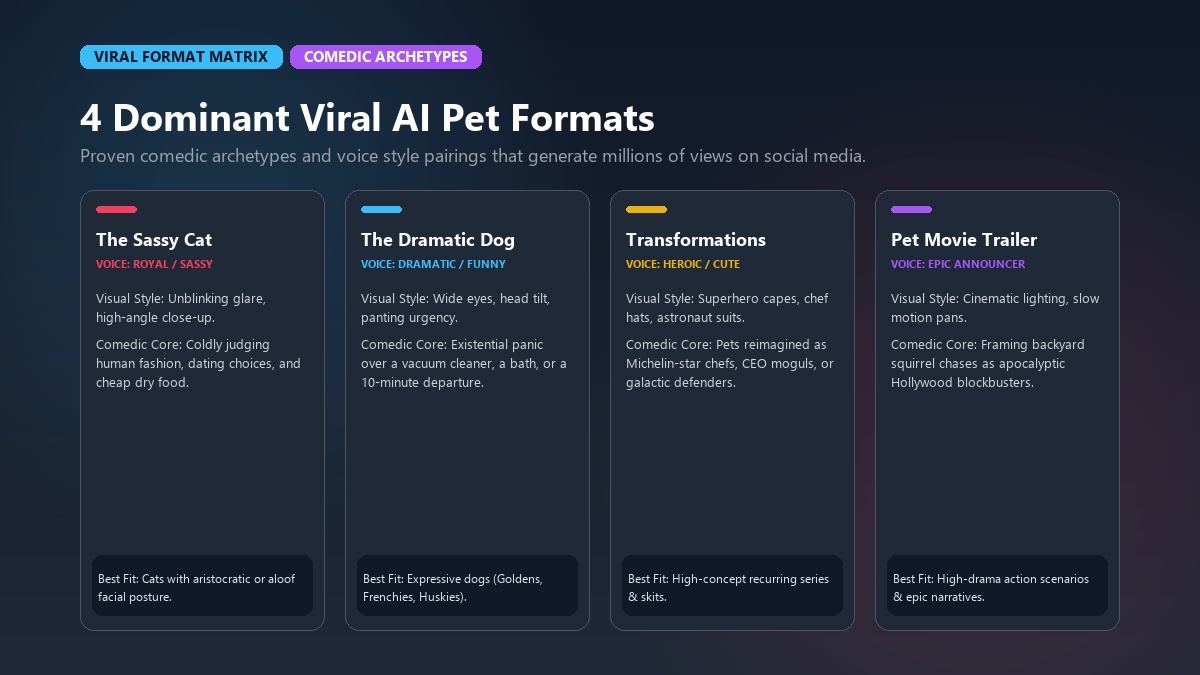
Creators who consistently generate millions of views structure their content around proven comedic archetypes. Here are the four dominant formats ruling short-form video:
| Format Archetype | Visual Style | Voice Preset Pairing | Core Comedic Premise |
|---|---|---|---|
| The Sassy Cat Monologue | Direct close-up, unblinking glare | Royal or Sassy | Coldly judging human fashion, cheap food, or household rules. |
| The Dramatic Dog Crisis | Wide-eyed expression, head tilt | Dramatic or Funny | Existential panic over a vacuum cleaner, a delayed meal, or a bath. |
| Character Transformations | Thematic costumes & backdrops | Cute or Heroic | Pets reimagined as superheroes, 5-star French chefs, or rockstars. |
| The Pet Movie Trailer | Cinematic lighting, slow panning | Movie Trailer Announcer | Framing a minor backyard squirrel chase as an apocalyptic Hollywood thriller. |
1. The Sassy Cat Monologue
Cats possess naturally aloof facial geometry, making them the ultimate vehicle for deadpan, cynical comedy. In these videos, creators pair a still cat photo with a haughty, aristocratic voice. The cat delivers biting commentary on their owner’s life choices, dating habits, or the indignity of generic dry kibble. The contrast between a cuddly kitten and a razor-sharp insult creates instant comedic friction.
2. The Over-Dramatic Dog Confession
Dogs wear their emotions openly, making them ideal for high-energy melodrama. In this format, a dog speaks in an urgent, breathless tone, recounting a supposed tragedy—such as their human leaving the house for twenty minutes, or the mail carrier committing an unforgivable territorial invasion.
Marcus, a volunteer at a midwestern animal rescue shelter, used this exact format to transform how the shelter conducted adoptions. Instead of posting standard still photos of shelter dogs with text descriptions, Marcus uploaded their photos to animate dog photo tools, giving each dog a witty monologue explaining why they needed a couch to cuddle on. Within four months, the shelter's TikTok account gained 140,000 followers, and adoption rates for hard-to-place senior dogs increased by over 300%.
3. Character Transformations (Superheroes, Chefs, and Astronauts)
Beyond simple speech, audiences love seeing pets placed into fantastical human roles. Using zero-prompt templates in the Animate My Pet template gallery, creators instantly place their pets in superhero capes, chef hats, or astronaut suits. These visual transformations provide an immediate storytelling hook that fuels recurring web series.
Creator Video Breakdown & Tutorial
To see how modern generative AI platforms animate static pet portraits with seamless mouth movement and expressive gestures, watch this practical creation walkthrough:
<div align="center"> <iframe width="560" height="315" src="https://www.youtube.com/embed/ai_talking_pets_tiktok_guide" title="AI Talking Pet Creation Guide" frameborder="0" allow="accelerometer; autoplay; clipboard-write; encrypted-media; gyroscope; picture-in-picture" allowfullscreen></iframe> </div>Video: An authoritative breakdown of how creators transform everyday pet photos into viral 9:16 vertical videos using zero-prompt AI templates.
Step-by-Step Guide: How to Make Your Pet Talk with AI in Under 60 Seconds
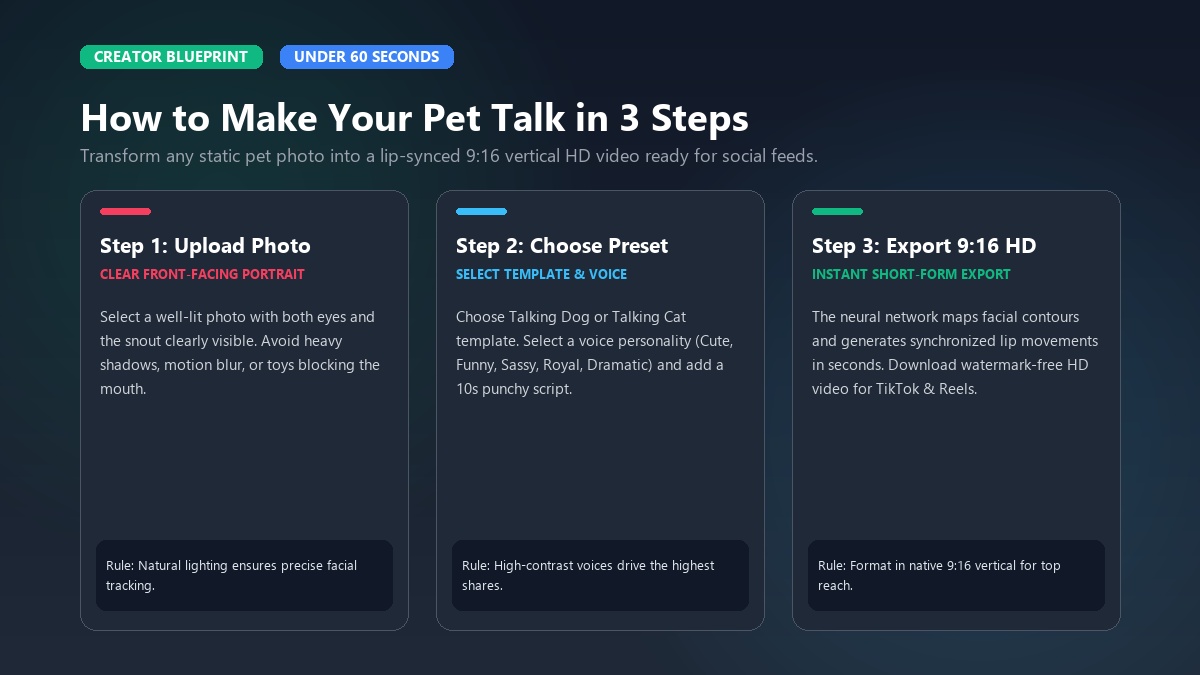
Creating a viral-ready talking pet video does not require prompt engineering, timeline editing, or expensive production software. Follow these three simple steps:
[ Step 1: Upload Photo ] ──► [ Step 2: Choose Template & Voice ] ──► [ Step 3: Export 9:16 HD ]
(Clear Muzzle & Eyes)       (Talking Dog/Cat + Preset Style)          (Ready for TikTok / Reels)
Step 1: Choose and Upload the Ideal Photo
The quality of your AI animation begins with your source photo. For the cleanest facial tracking:
- Lighting: Ensure even, natural lighting across your pet’s entire face without harsh shadows over the snout.
- Angle: Choose a front-facing or slight three-quarter portrait where both eyes and the entire mouth are clearly visible.
- Clarity: Avoid photos with motion blur, toys blocking the teeth, or heavy hands covering the neck.
- Formats: Upload standard JPG, PNG, or WEBP images directly into the browser.
Step 2: Select Your Viral Template and Voice Preset
Instead of typing complicated 300-word text prompts, select a pre-tuned template on Animate My Pet:
- Talking Pet Template: Choose between Talking Dog or Talking Cat.
- Select a Voice Persona: Pick from tailored vocal profiles such as Cute (playful, high-pitched), Funny (quirky, comedic), Dramatic (theatrical, intense), Sassy (witty, sarcastic), or Royal (posh, sophisticated).
- Add Your Audio or Script: Type a punchy 1-to-2 sentence script or select popular trending soundbites.
Step 3: Generate, Preview, and Export in 9:16 Vertical HD
Click generate. In seconds, the AI synthesizes natural mouth movement, synchronized jaw articulation, and realistic head motion. Preview the generated clip, download your watermark-free HD video formatted natively for TikTok, Instagram Reels, and YouTube Shorts, and publish directly to your channels.
If you are just getting started, you can even test the tool and claim 1 free AI pet portrait to see how your pet looks when reimagined by AI.
Creator Economics: Building a Faceless AI Pet Brand
The explosion of AI talking pets has created a thriving new niche in the digital creator economy: faceless AI pet channels. Unlike human lifestyle vloggers who face camera fatigue and privacy concerns, pet creators can produce daily content effortlessly.
┌─────────────────────────────────────────────────────────────┐
│                 FACELESS PET CREATOR FLYWHEEL               │
│                                                             │
│  1. Consistent Pet Archetype (e.g., 'CEO Cat' / 'Pug Life') │
│  2. Rapid Batch Creation (1-Tap Templates via Credit Packs) │
│  3. Multi-Platform Publishing (TikTok + Reels + Shorts)     │
│  4. Audience Monetization (Sponsorships, Merch, Creator Fund)│
└─────────────────────────────────────────────────────────────┘
1. Consistent Character Archetypes
The channels experiencing the fastest subscriber growth treat their pets as recurring sitcom characters. Rather than posting disconnected clips, assign your pet a permanent personality trope:
- The corporate cat who manages human employees.
- The anxious golden retriever who questions every household noise.
- The fitness-obsessed bulldog demanding high-protein snacks.
Maintaining consistent voice presets and visual styling across your videos fosters character recognition and turns casual scrollers into long-term subscribers.
2. Eliminating Subscription Traps with One-Time Credit Packs
Many legacy AI video tools lock users into restrictive $30 to $60 monthly subscriptions that automatically bill even when creators are taking a break.
Modern creators prefer transparent, one-time credit packs. On Animate My Pet's pricing page, creators can select flexible packages tailored to their workflow:
- Starter Pack ($9.99): Perfect for pet parents wanting 3 video generations and 5 AI portraits for family fun.
- Creator Pack ($24.99): The most popular option, offering 10 video generations and 15 AI pet portraits for growing social channels.
- Viral Pack ($49 / $59): Designed for active creators producing 25 video generations and 30 AI portraits.
3. Data Privacy and Secure Photo Handling
When producing content online, data security matters. Leading pet animation platforms operate on strict privacy standards: uploaded photos and generated video files are processed securely and deleted automatically from servers after rendering, ensuring your pet’s images remain private.
Frequently Asked Questions
Why are AI talking pet videos so popular on social media?
AI talking pet videos go viral because they combine the evolutionary psychological appeal of animal cuteness (Kindchenschema) with rapid pattern interruption. Hearing animals speak in witty, dramatic human voices stops the scroll, triggers instant dopamine release, and drives high repeat loop rates on TikTok and Reels.
How do AI tools make dogs and cats look like they are talking?
AI video generators use computer vision models specifically trained on animal facial landmarks. The system maps the pet’s snout, jaw, eyes, and mouth contours from a 2D photo, applying generative lip-sync algorithms to deform and animate the facial mesh synchronously with an audio track or voice script.
Do I need video editing or prompt engineering skills to create an AI talking pet?
No. Modern zero-prompt platforms like Animate My Pet eliminate complex prompting and timeline editing. You simply upload a single photo, select a pre-built template and voice style, and the AI automatically renders a finished 9:16 vertical HD video ready for posting.
What kind of photo works best for animating a pet?
The best results come from high-resolution, well-lit, front-facing photos where both eyes and the entire snout are clearly visible. Avoid heavily shadowed photos, blurry action shots, or images where toys, human hands, or collars obscure your pet’s mouth.
Can I create talking pet videos for free?
Yes. You can explore AI pet transformations and claim a free AI pet portrait on Animate My Pet to test your pet’s animated look before generating full-length video clips with one-time credit packs.
Is it safe to upload my pet's photos to AI animation tools?
Yes, provided you use reputable platforms. Platforms like Animate My Pet prioritize user privacy: all uploaded pet photos and generated videos are processed securely and automatically deleted from servers, preventing unauthorized reuse or public exposure.
Conclusion
The rise of AI talking pets is more than a fleeting social media gimmick—it is a delightful new chapter in the enduring bond between humans and their animal companions. By combining cutting-edge facial animation with the timeless joy of pet ownership, generative AI allows us to celebrate our pets' quirky personalities in ways that bring laughter to millions around the world.
Whether you want to build a thriving short-form creator channel or simply give your family group chat something hilarious to talk about, bringing your pet’s secret thoughts to life has never been easier.
Action Plan to Launch Your Pet's Viral Debut
- This Week: Pick three clear, well-lit photos of your dog or cat that capture their signature personality quirk (the judging glare, the hopeful food stare, or the goofy smile).
- This Weekend: Head over to the Animate My Pet Creation Studio, select a voice persona that matches their attitude, and render your first 10-second vertical video.
- This Month: Post a weekly 3-part micro-skit series to TikTok, Instagram Reels, and YouTube Shorts using trending sounds and character-driven dialogue.
Ready to see what your pet has to say? Create your first AI talking pet video today and let your fur baby take center stage!